

Fluorescence imaging of DNA damage after WRN inhibitor exposure
  • DNA damage induction is a central mechanism of many anti‑cancer therapies, as accumulation of unrepaired DNA double‑strand breaks ultimately leads to tumor cell death.

  • Microsatellite instability is a common genomic alteration in multiple solid tumors and occurs most often in colorectal, endometrial, and gastric cancers.1

  • Pharmacological inhibition of the DNA helicase WRN selectively induces DNA damage in microsatellite instable (MSI) tumor cells, while sparing microsatellite stable and normal cells, making WRN an attractive therapeutic target.2

  • γH2A.X is a well‑validated and quantitative marker for DNA double‑strand breaks.

  • To evaluate DNA damage induced by WRN inhibition in MSI cells, the MSI colorectal cancer cell line HCT 116 was treated with the WRN inhibitors HRO761 and VVD‑214 using a duplicate 9‑point dose range. Doxorubicin was included as a reference DNA damage-inducing agent.

  • High‑content fluorescence imaging on the CellInsight™ CX7 LZR Pro platform was used to assess γH2A.X foci number and signal intensity per nucleus. Measuring the number of γH2A.X foci enables differentiation between the occurrence of many simple DNA breaks and fewer, more complex lesions. Measurement of the intensity per nucleus ensures that DNA damage is not underestimated at high damage levels.

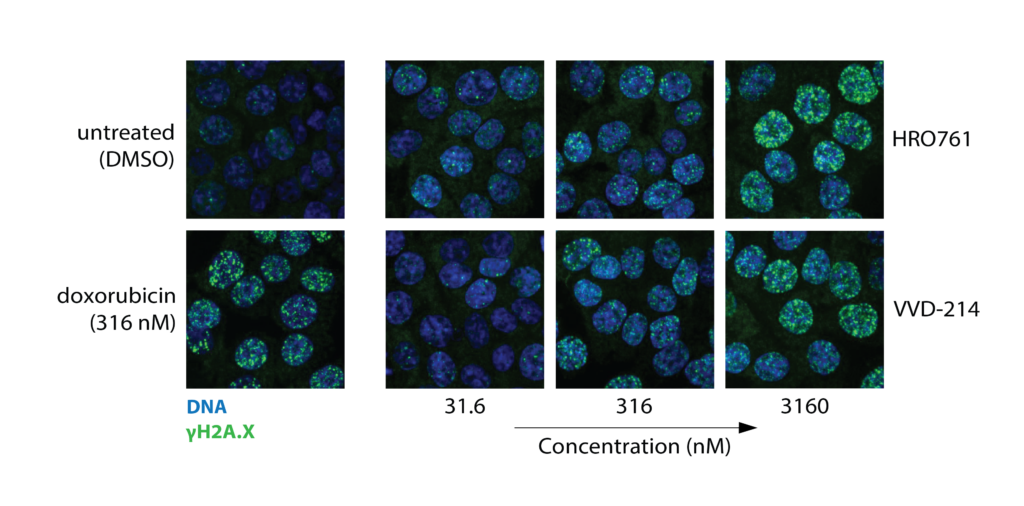
  • A clear concentration‑dependent increase in γH2A.X foci number and nuclear intensity was observed, confirming DNA damage induction by the WRN inhibitors HRO761 and VVD-214 in MSI cells (Figure 1 and 2).

  • This imaging-based read-out provides insight into downstream biological effects of compounds and validates their activity at the mechanistic level.

Figure 1 | Images of HCT 116 cells after 6 hours of doxorubicin or WRN inhibitor treatment.
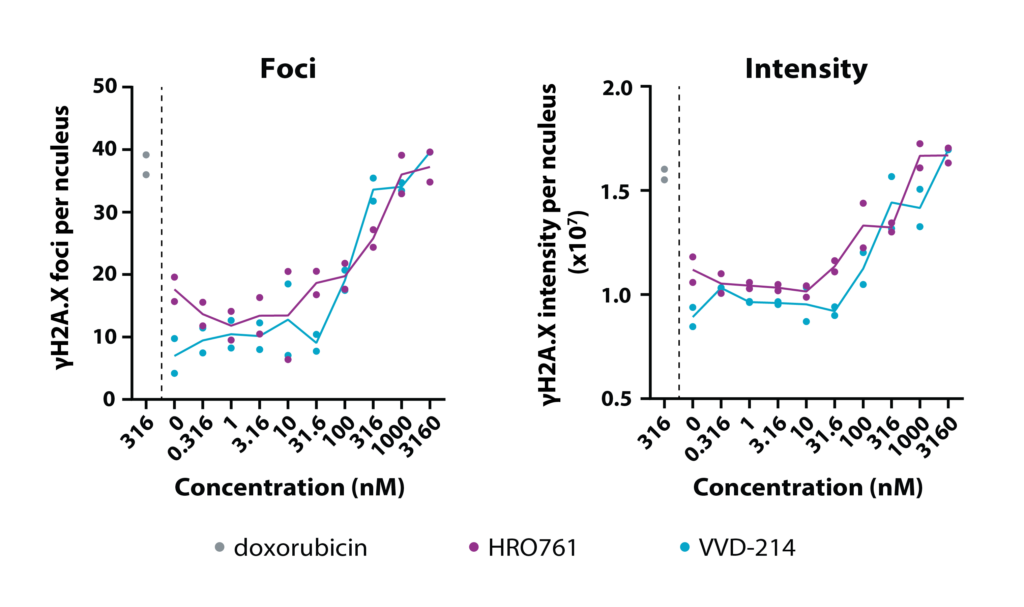
Figure 2 | DNA damage was quantified by measuring γH2A.X foci per nucleus (left) and γH2A.X fluorescence intensity per nucleus (right).

References
1. Kavun et al. (2023) Microsatellite Instability: A Review of Molecular Epidemiology and Implications for Immune Checkpoint Inhibitor Therapy. Cancers (Basel).
2. Zhang et al. (2025) WRN as a Novel Target of Synthetic Lethality: Current Advances and Future Perspectives. Journal of medicinal chemistry.