

Bioinformatics
In addition to our established bioinformatics analyses, we offer customized bioinformatics services tailored to meet the specific needs of your project. Our custom analyses cover a wide range of applications aimed to derive meaningful insights from complex biological data. The Oncolines bioinformatics team can support your project by identifying the most relevant cell line models for in vitro studies, conducting in silico explorations of clinical datasets, or analyzing next-generation sequencing data. Below, several examples of bioinformatics analyses are described. Please contact us to discuss your project’s needs and learn how our custom bioinformatics services can advance your project.
Target Validation Using Clinical Datasets
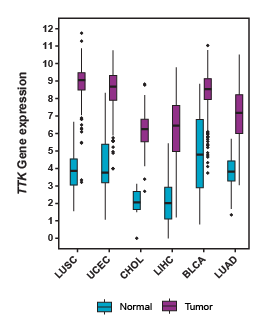
Exploration of publicly available clinical datasets can shed light on the therapeutic relevance of potential novel targets for cancer treatment. For instance, The Cancer Genome Atlas (TCGA) pan-cancer dataset provides molecular and clinical features of more than 10,000 primary cancer and matched normal samples across 32 cancer types. The features of cancer samples can be compared to those of matched normal samples to find relevant genomic differences. These differences can then be related to clinical features of the patients, such as overall survival.
Dedicated Gene Mutation Analysis
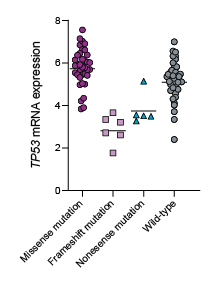
Our established Oncolines® bioinformatics gene mutation analysis is used to identify genomic drug response biomarkers. This is done by classifying profiled cell lines as either wild-type or mutant for a selection of relevant genes and relating this to the sensitivity of a compound. However, this binary classification may not always sufficiently capture the complex cancer biology required to find such predictive drug response biomarkers. With a dedicated gene mutation analysis, mutant cell lines are subdivided into focused mutation groups based on mutation type, amino acid position, functional location or other relevant features. The sensitivity profile of a compound or data from public datasets can then be compared between or related to the specific wild-type and mutant cell line groups.
Genetic Variant Filtering Pipeline
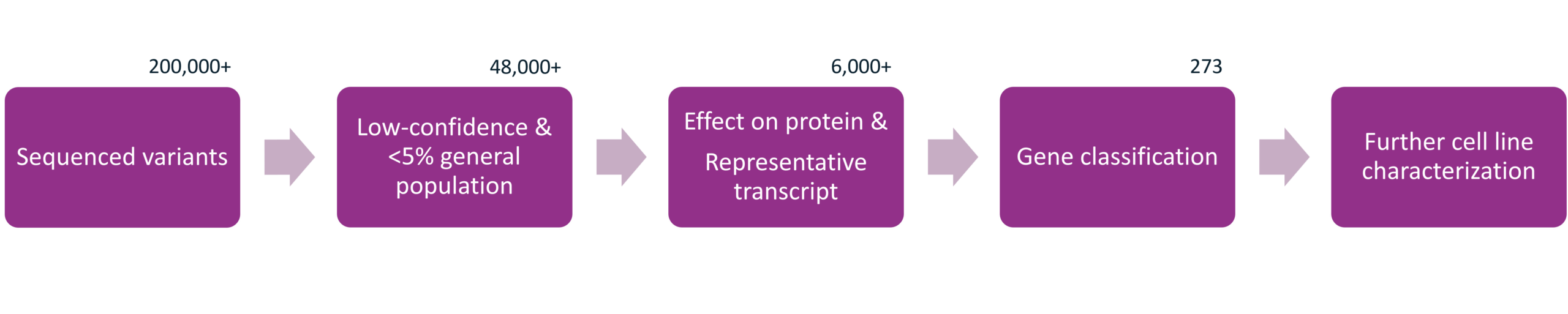
DNA sequencing of cell lines or patient biosamples typically yields a large number of genetic variants. However, the vast majority of genetic variants are not involved in disease development or related to drug response. A genetic variant filtering pipeline can be applied to identify variants that are likely to play a role in tumor development. A series of filtering and annotation strategies are applied in which biological context drives the selection. Filtering and annotation are not only essential for pinpointing biologically relevant variants, but also to ensure that only high-quality variants are being used in further analysis. Thanks to the flexible design of our pipeline, gene classifications can be easily adjusted, and genes can be added or removed as needed. By integrating external datasets and literature, we can further refine the analysis to identify the most relevant variant(s) for your specific sequencing analysis needs.
Differential Gene Expression Analysis
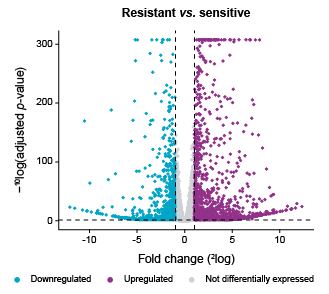
In-depth bioinformatics analyses on RNA sequencing datasets can provide insights into, for instance, resistance mechanisms against anti-cancer agents. These datasets can be obtained from cell lines that are intrinsically resistant or have acquired resistance after continuous exposure to a drug. A differential gene expression analysis shows the differences in gene expression between sensitive and resistant cell lines. Over- or underexpressed genes in resistant cell lines may contribute to drug resistance mechanisms. Identification of these genes can therefore help the development of therapeutic strategies to prevent or overcome resistance.

Information needed?
Please contact us to discuss your project’s needs and learn how our custom bioinformatics services can advance your project.