

Binding kinetics of TROP2-targeted ADCs and antibodies via ResidenceTimer™

  • Trophoblast cell surface antigen 2 (TROP2) is a cell surface receptor that is highly expressed in epithelial tumors, making it an attractive antibody–drug conjugate (ADC) target.
  • Datopotamab deruxtecan (Dato-DXd) and sacituzumab tirumotecan (sac-TMT) are two TROP2-targeted ADCs that were recently approved for clinical use.

  • A series of surface plasmon resonance (SPR) experiments was performed to explore TROP2-targeted ADC and antibody binding kinetics through two different approaches.

  • First, the biotinylated extracellular domain of TROP2 was immobilized on a streptavidin-coated SPR chip and binding kinetics of Dato-DXd and its parent antibody datopotamab on TROP2 were compared using single-cycle kinetics.

  • Since each antibody can bind to two immobilized TROP2 proteins and these consecutive binding steps occur at different rates, the binding and dissociation curves are biphasic. For this reason, a bivalent analyte model was applied to extract the binding kinetics of the first binding event (Figure 1A)*, from which the monovalent affinity was determined as KD1 = kd1/ka1. As expected, Dato-DXd and datopotamab yield highly consistent data (Figure 1B).

  • Next, the approach was reversed with TROP2-targeted antibody immobilized on a protein G-coated SPR chip.

  • Since each TROP2 extracellular-domain protein can only bind to one antibody, data obtained with this approach can be fitted with a 1:1 binding model (Figure 2A). Although the two approaches yield clearly distinct sensorgrams, the extracted binding kinetics of the first binding event are very consistent (Figure 2B).

  • Finally, the two parent antibodies of Dato-DXd and sac-TMT were compared using the second approach and an isotype control was included as well (Figure 3). This revealed sacituzumab as the strongest TROP2 binder with a monovalent affinity of 1.22 nM, whereas datopotamab bound with 32.7 nM affinity. Moreover, use of the isotype control revealed the absence of nonspecific antibody binding to TROP2.

  • Together, these data demonstrate how different SPR approaches can be applied to determine and compare binding kinetics across antibody and ADC candidates.

* Note that kinetics of the second binding event are not reported, since these are dependent on the TROP2 immobilization density.
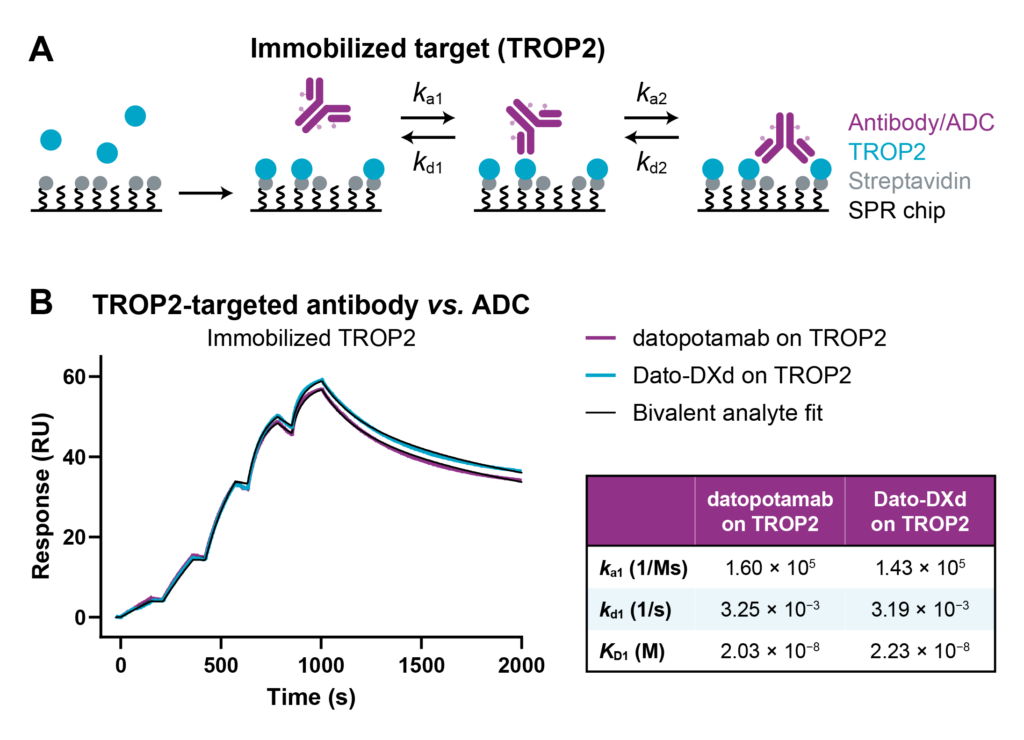
Figure 1 | Comparison of TROP2-targeted antibody and ADC binding to immobilized TROP2 using SPR.
(A) Schematic representation of TROP2 immobilization and the binding events described by the bivalent analyte model.
(B) Representative sensorgrams and binding kinetics.
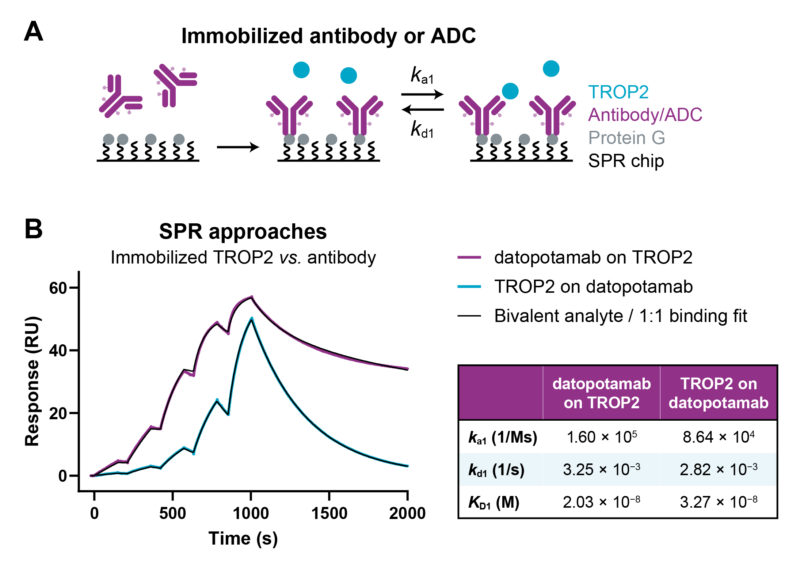
Figure 2 | Comparison of two SPR approaches for determination of antibody binding kinetics to TROP2.
(A) Schematic representation of antibody or ADC immobilization and the binding events described by the 1:1 binding model.
(B) Representative sensorgrams and binding kinetics.
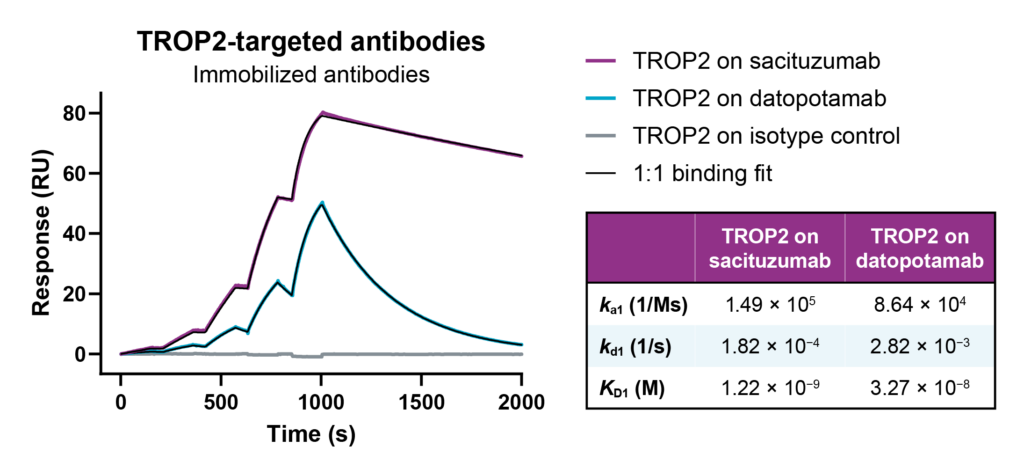
Figure 3 | Comparison of TROP2 binding kinetics to immobilized antibodies and isotype control.