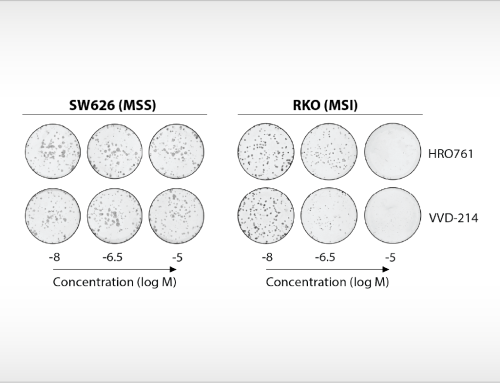

DNA damage induction is the mechanism behind many anticancer therapies, driving tumor cells toward death through build-up of unrepaired lesions. WRN DNA helicase inhibitors, such as HRO761 and VVD-214, are among these DNA damage-inducing agents. WRN inhibition represents a promising therapeutic strategy, as it selectively induces DNA damage in microsatellite instable (MSI) tumor cells, a common alteration in colorectal cancer, while sparing microsatellite stable and normal cells.
To explore this mechanism in detail, we conducted a high‑content fluorescence imaging study using the CellInsight™ CX7 LZR Pro platform. DNA damage was quantified using the DNA damage marker γH2A.X in the MSI colorectal cancer cell line HCT 116 following treatment with the WRN inhibitors HRO761 and VVD-214. Doxorubicin was included as a reference DNA damage-inducing agent. A clear concentration‑dependent increase in both γH2A.X foci number and signal intensity demonstrated DNA damage induction by the WRN inhibitors. With this imaging‑based readout we gain mechanistic insight into compound activity and capture downstream biological effects beyond standard viability readouts.
Imaging approaches enable the spatial and quantitative analysis of cellular processes at single‑cell resolution. Beyond measuring DNA damage, high-content imaging has many applications, including the examination of protein localization within specific cell organelles and the monitoring of nuclear translocation of transcription factors.
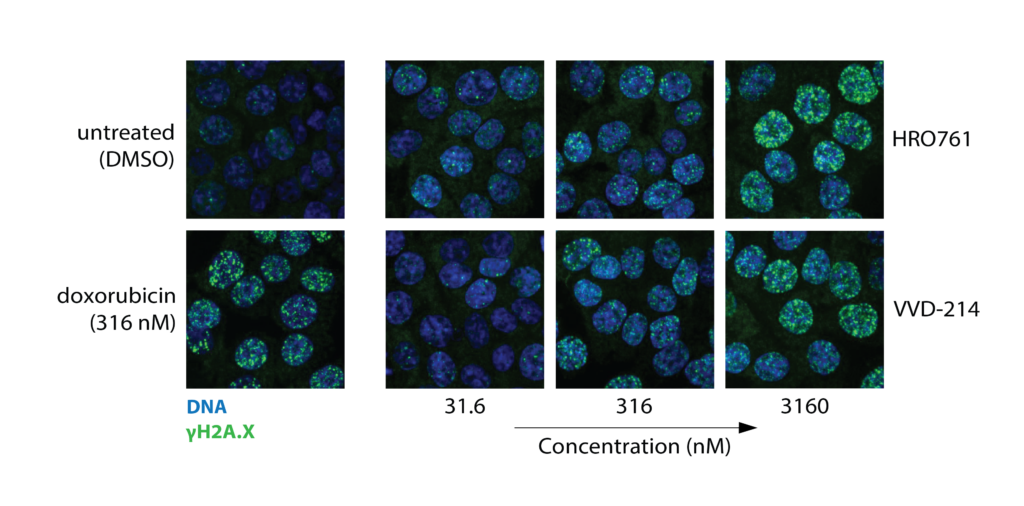
Figure | Images of HCT 116 cells after 6 hours of doxorubicin or WRN inhibitor treatment.
Oncolines B.V. is a precision medicine services company in oncology and cancer immunotherapy. Oncolines is part of the Symeres group of companies, a group of high-quality CROs and CDMOs based in Europe and the United States.