
The colony-forming unit (CFU) assay offers a valuable approach to evaluate the effects of anti-cancer agents on cancer cells after extended exposure. Drug efficacy is commonly measured using short-term viability assays, typically up to 5 days, where overall metabolic activity of the cell population after exposure is used as readout. In contrast, the CFU assay is used to assess the capacity of a single cell to survive treatment and form a colony after prolonged compound exposure. This makes the CFU assay well suited for drugs whose effects accumulate over multiple cell cycles, such as drugs that cause DNA damage during DNA replication.
WRN inhibitors are an example of such DNA damage-inducing drugs and selectively induce cell death in microsatellite instable (MSI) cells. Microsatellite instability is a prevalent genomic alteration in several solid tumors, including colorectal cancer, and is characterized by variations in length of repetitive DNA sequences. The WRN DNA helicase is essential in MSI cells because it helps resolve replication stress caused by expanded repetitive DNA sequences. Pharmacological inhibition of WRN leads to the accumulation of DNA damage and induces cell death in MSI tumor cells. In contrast, microsatellite stable (MSS) and normal cells are largely spared, underscoring the potential of WRN as a selective therapeutic target.
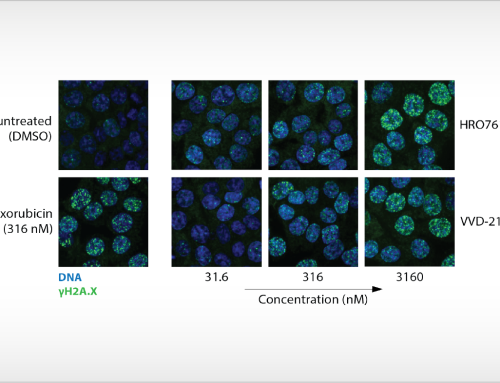
To evaluate the sensitivity of MSI and MSS cells to WRN inhibitors, the CFU assay was performed following treatment with the inhibitors HRO761 and VVD-214. Three MSS colorectal cancer cell lines and three MSI cell lines were treated with a duplicate 9-point dose range of the WRN inhibitors. The cells were exposed to the compounds for 7-20 days, after which both ATPlite™, as an indirect measure of cell number, and colony counting using a GelCount™ were used as readouts. The results show a clear, dose-dependent decrease in cell number and colony formation in the MSI cell lines, while the MSS cell lines remain largely unaffected.
At Oncolines, the CFU assay is readily available for a panel of 18 cancer cell lines, including colorectal, ovarian, cervical and bone cancer cell lines. We can also optimize the CFU assay for other cell lines of interest.
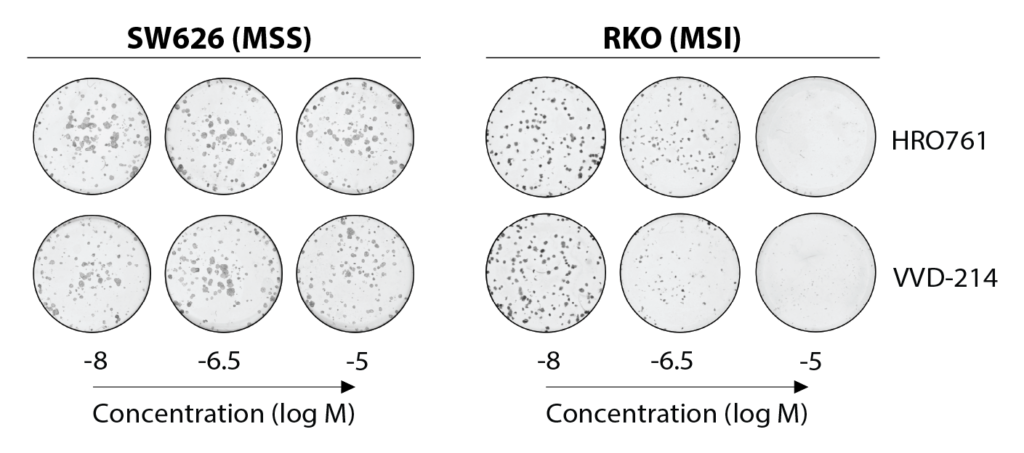
Figure | Images of the stained colonies from a microsatellite stable (MSS) and microsatellite instable (MSI) cell line following treatment with the WRN inhibitors HRO761 and VVD-214.
Oncolines B.V. is a precision medicine services company in oncology and cancer immunotherapy. Oncolines is part of the Symeres group of companies, a group of high-quality CROs and CDMOs based in Europe and the United States.